

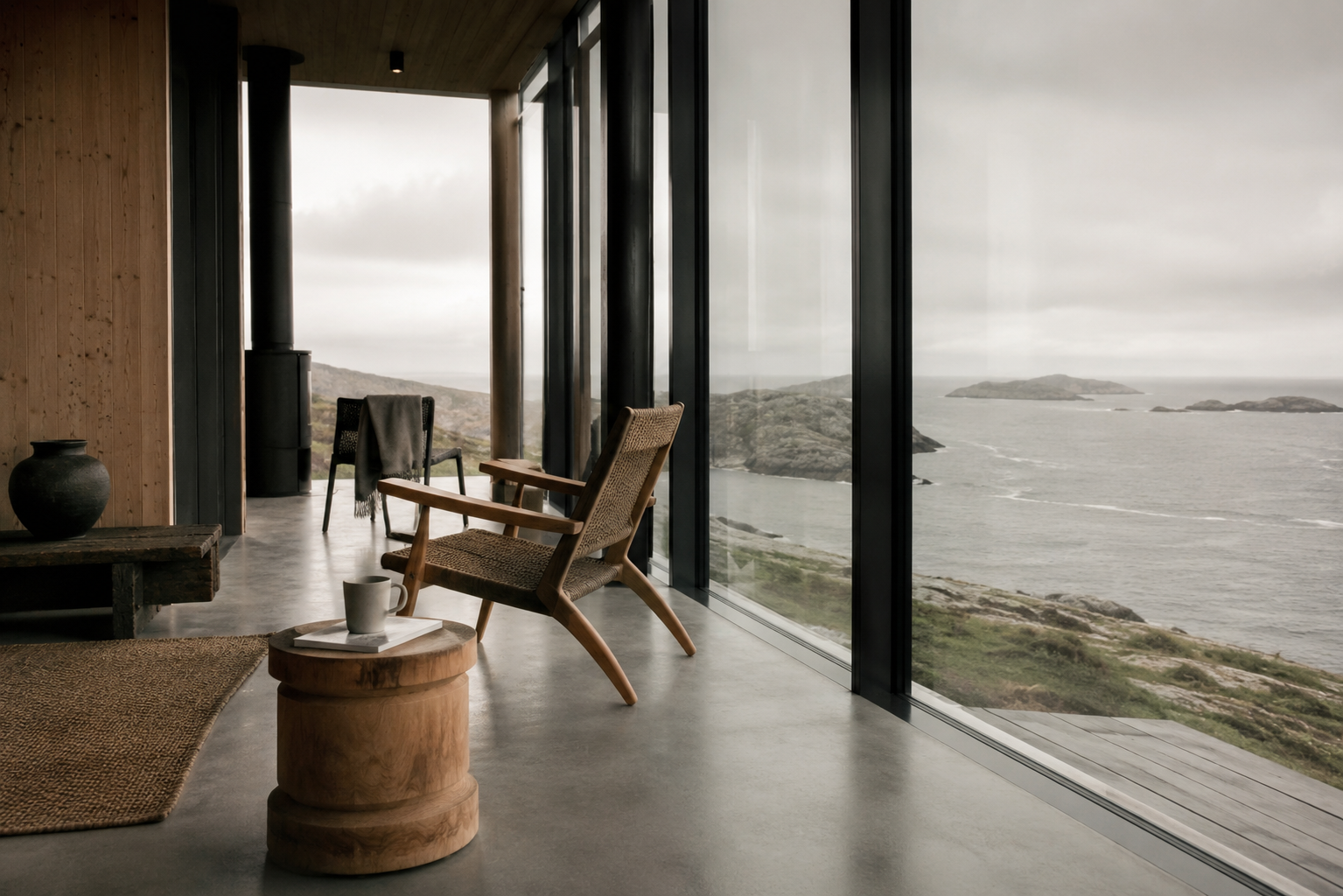
Quiet luxury has become one of the defining ideas of contemporary luxury. Across fashion, design and travel, conspicuous consumption is giving way to something more restrained: craftsmanship instead of logos, provenance instead of prestige, privacy instead of performance.
In hospitality, the shift is particularly visible. Luxury is increasingly measured not by how much a hotel can add to an experience, but by how carefully it can remove what gets in the way of it.
Silence. Space. Nature. Good materials. Genuine service. A sense of belonging somewhere.
In the Nordics, this isn’t a particularly new idea.
Long before quiet luxury became part of the international hospitality vocabulary, destinations and brands across Scandinavia were shaped by many of the principles now defining its appeal.
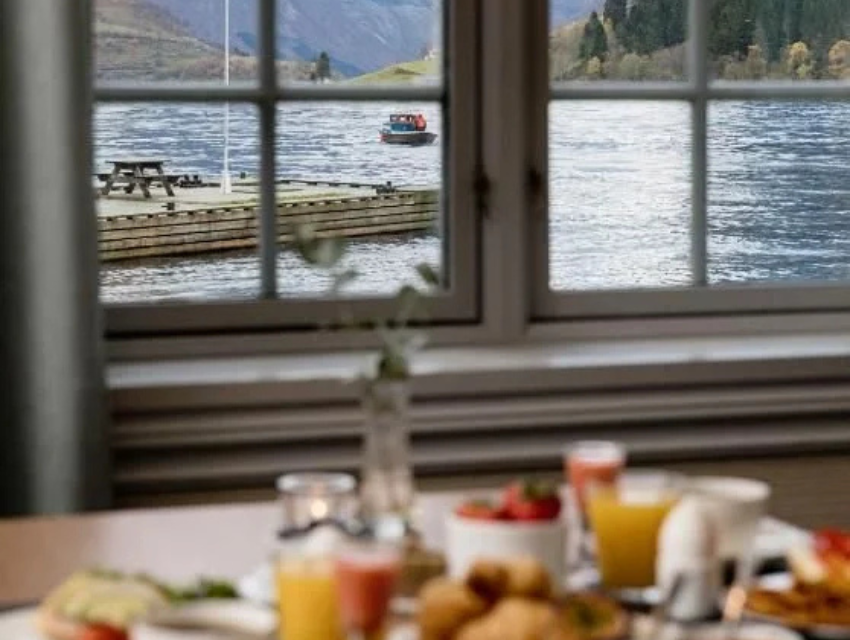
Needless to mention, Nordic hospitality is not synonymous with extravagance.
Part of that comes from the region’s design tradition. Scandinavian modernism developed around functionality, craftsmanship and an appreciation for natural materials. Designers such as Alvar Aalto, Hans J. Wegner and Arne Jacobsen demonstrated that an object didn’t need ornamentation to be valuable. Its quality could reveal itself through material, proportion and the way it was made.
Those ideas inevitably found their way into hospitality.
One of the most important examples opened in Copenhagen in 1960. Arne Jacobsen designed the SAS Royal Hotel – today’s Radisson Collection Royal Hotel – as an artwork of it time, overseeing everything from the building and furniture to lighting, textiles and cutlery. His Egg and Swan chairs were originally created for this specific hotel.
It was sophisticated without relying on the visual language traditionally associated with grand European hotels.
More than six decades later, that approach feels surprisingly contemporary.
Travel north through Scandinavia and another characteristic becomes apparent: some of the region’s greatest hotels have never needed to manufacture a sense of place.
They already had one.
Norway’s historic fjord hotels grew alongside the arrival of international travellers during the 19th century, when visitors came to experience landscapes unlike those they knew at home. Properties such as Hotel Union Øye, which dates back to 1891, and Walaker Hotel, whose history stretches back several centuries, are reminders that destination hospitality in the region existed long before today’s enthusiasm for remote retreats.
The proposition was remarkably simple: come here, stay well and experience the place.
That philosophy still resonates.
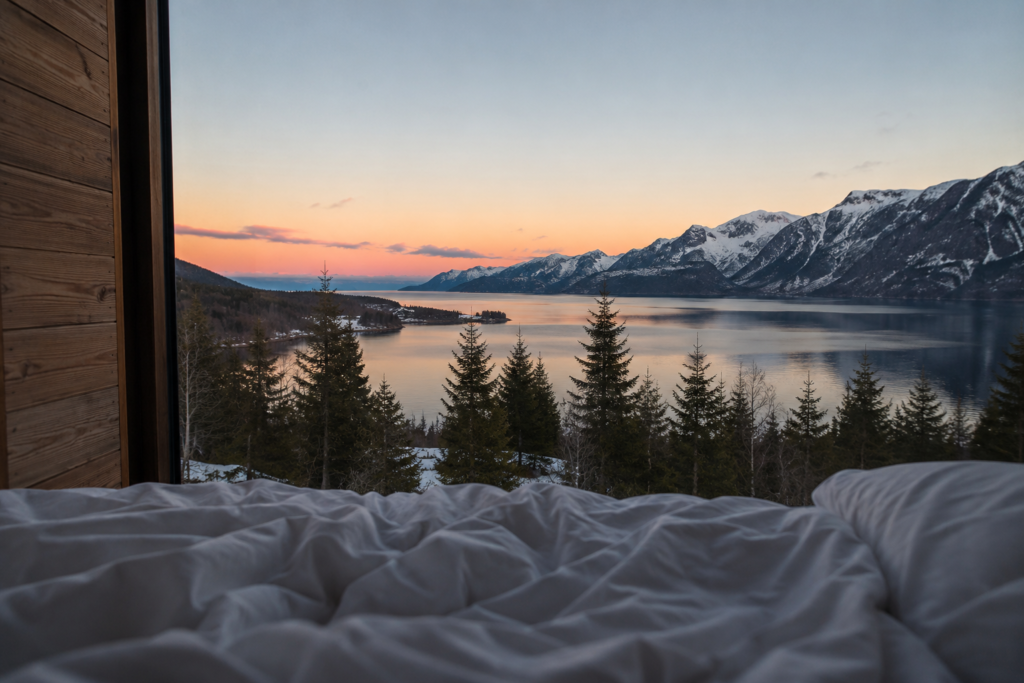
Across the contemporary Nordic hospitality landscape, the view from the window is often more important than what hangs on the wall. Architecture frames forests, mountains, sea and sky rather than competing with them. Materials such as timber, stone, wool and linen connect interiors with their surroundings.
The landscape isn’t an amenity added to the hotel.
It is often the reason the hotel exists.
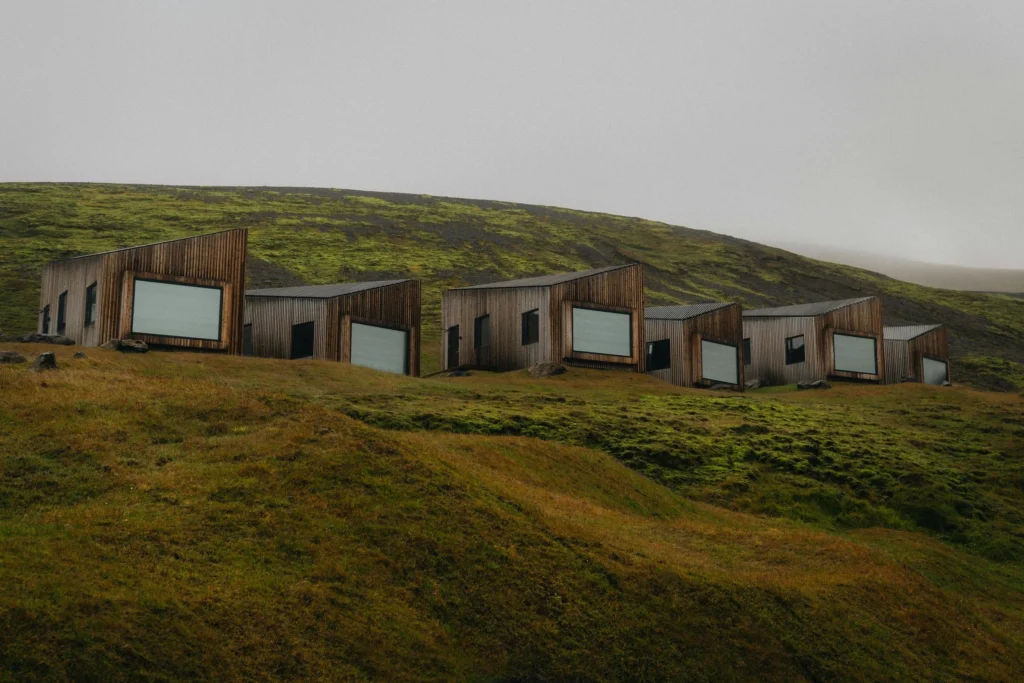
There is another Nordic resource that has become unexpectedly valuable: silence.
Luxury travel once centred heavily on access to things – the best restaurants, shops, nightlife, cultural institutions and social circles. Those things still matter. But for increasingly connected and overstimulated travellers, access to nothing can be equally desirable.
A cabin where you cannot hear traffic. A hotel surrounded by forest. An island with only a handful of guests. A room where the dominant sound is the sea.
These experiences are difficult to mass-produce, which is precisely what makes them valuable.
The Nordics have an obvious geographical advantage here. Norway, Sweden and Finland are among Europe’s most sparsely populated countries, while vast parts of the region offer extraordinary access to wilderness.
Contemporary hotels have begun turning that geographical reality into a sophisticated hospitality proposition. Treehotel and Arctic Bath in Swedish Lapland, for example, use architecture not to separate guests from wilderness but to place them more deliberately within it.
The absence of stimulation becomes part of the experience.
〰︎〰︎〰︎〰︎〰︎〰︎〰︎〰︎〰︎〰︎〰︎〰︎〰︎〰︎〰︎〰︎〰︎〰︎〰︎〰︎〰︎〰︎〰︎〰︎〰︎〰︎〰︎〰︎〰︎〰︎〰︎〰︎〰︎〰︎〰︎〰︎〰︎〰︎〰︎〰︎〰︎〰︎〰︎〰︎〰︎〰︎〰︎〰︎〰︎〰︎〰︎〰︎〰︎〰︎〰︎〰︎〰︎〰︎〰︎〰︎〰︎〰︎〰︎〰︎〰︎〰︎〰︎〰︎〰︎〰︎〰︎〰︎
Understatement only works when the underlying quality is exceptional.
Take away chandeliers, marble lobbies and obvious symbols of expense and guests begin noticing different things: the weight of a door handle. The quality of the linen. The chair beside the window. The acoustics of the room. The bread at breakfast. The temperature of the lighting.
This is where the Nordic tradition of craftsmanship becomes particularly relevant.
Woodworking, textiles, ceramics and furniture making have deep roots throughout the region, and the Scandinavian design movement turned many of these traditions into an internationally recognised design language during the 20th century.
In the best Nordic hotels, these elements aren’t simply decoration. They create an environment that feels considered without appearing over-designed.
Quiet luxury is not about having fewer details.
It is about making the details that remain matter.
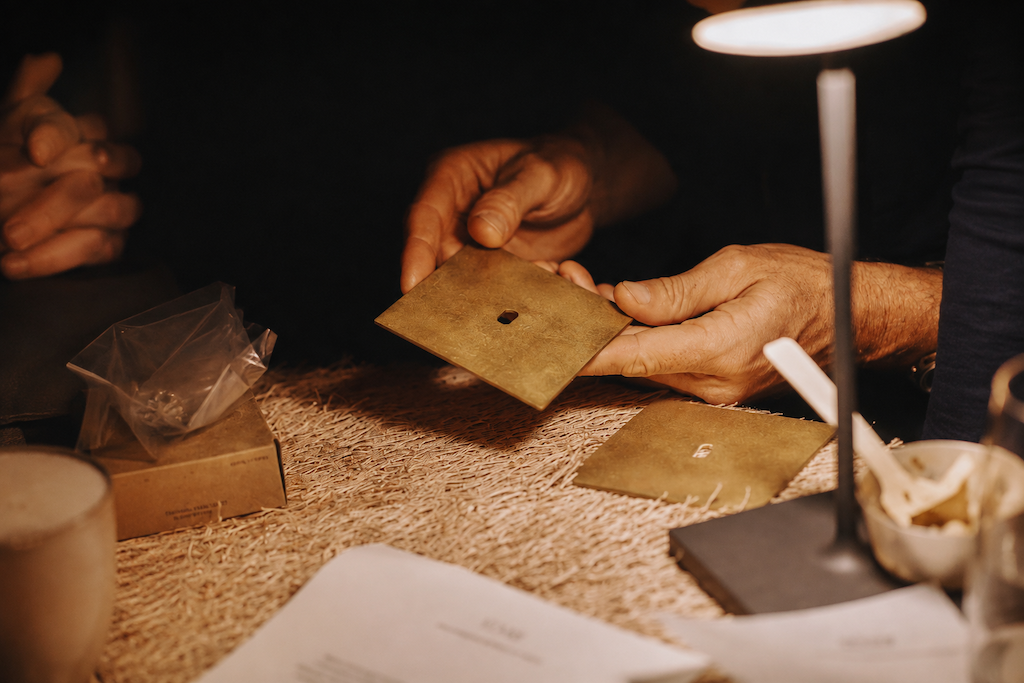
Perhaps one of the most overlooked elements of Nordic luxury hospitality is service.
Traditional luxury service has often been built around hierarchy and formality: titles, uniforms, rituals and highly choreographed interactions.
Nordic hospitality tends to feel more informal.
The person checking you in may also tell you where to swim in the morning. A hotel owner might be present at breakfast. Restaurant service can be highly knowledgeable without feeling ceremonial. Conversations happen naturally rather than according to a script.
At its best, this creates something difficult to standardise: the feeling of being genuinely hosted.
Informality should not be confused with a lack of sophistication. Delivering intuitive service without making the mechanics visible requires considerable skill.
The guest simply feels comfortable.
And that may be one of the quietest forms of luxury of all.
There is a tendency to interpret Nordic simplicity as minimalism. But the two aren’t necessarily the same.
A centuries-old wooden hotel in the Norwegian fjords can be full of colour, antiques and history and still embody understated luxury. So can a contemporary glass cabin in Lapland.
What connects them is not an aesthetic formula.
It is restraint.
Knowing what belongs and what doesn’t. Preserving what is authentic rather than replacing it. Allowing materials to age. Understanding when architecture should command attention and when it should disappear into the landscape.
This is why the strongest Nordic hospitality concepts are difficult to replicate elsewhere. Their identity comes from where they are.
The interesting development is not that Nordic hospitality has suddenly discovered quiet luxury.
It is that international luxury has moved closer to the values Nordic hospitality has embodied for decades.
Privacy has become more desirable. Sustainability and provenance matter more. Travellers increasingly want hotels with a distinct relationship to their destination. Experiences are replacing possessions as markers of status, while nature, wellbeing and space have moved towards the centre of luxury travel.
Even scarcity itself has changed.
In a permanently connected world, uninterrupted time is scarce. Silence is scarce. Darkness is scarce. Privacy is scarce. Genuine encounters are scarce.
The Nordics happen to have an extraordinary ability to provide them.
Perhaps this is why the region feels particularly relevant to the future of hospitality.
The opportunity is not to create Nordic versions of the big international luxury brands, but to build hotels that could only have come from here.
Hotels where luxury is found in the quality of the materials, the confidence to keep things simple, the warmth of the people and the landscape outside the window.
Hospitality that doesn’t simply occupy a destination, but feels inseparable from it.
Quiet luxury may have found its name only recently – but Nordic hospitality has been practising it for generations